A new white paper led by IUCN Netherlands, REWET partners, and supported by other EU-funded projects outlines key policy recommendations to accelerate wetland conservation and restoration across Europe. Read more
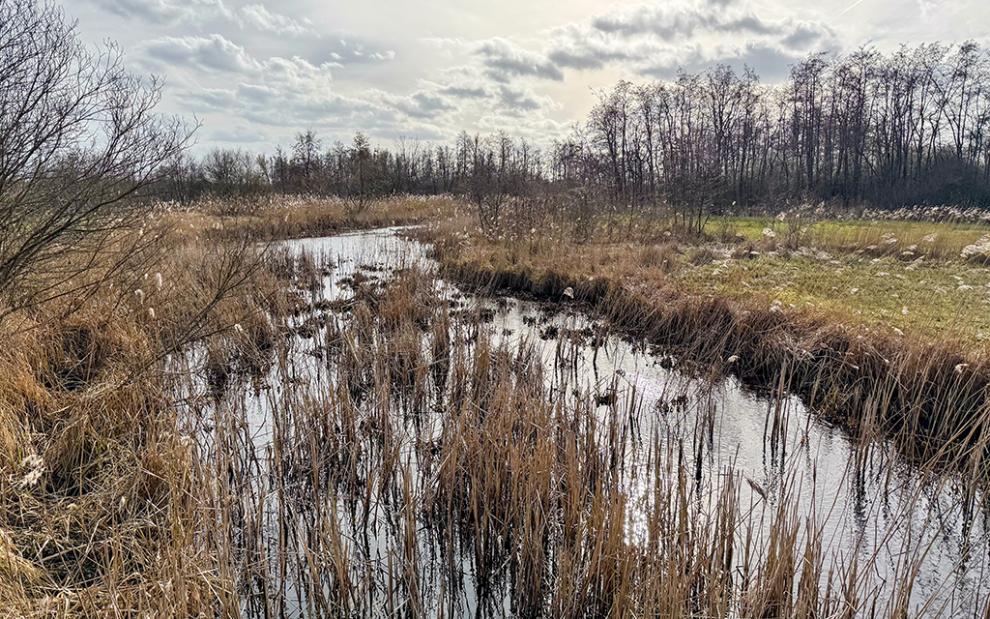
Wetlands are among the most valuable ecosystems in Europe, providing essential services such as carbon storage, flood protection, biodiversity conservation, and climate resilience. Despite their importance, they continue to face widespread degradation caused by drainage, infrastructure development, land-use change, and climate change.
To help address these challenges, IUCN Netherlands, partners in the REWET project, has led the development of a new white paper that synthesises evidence and practical experience from several EU-funded initiatives. The white paper brings together findings from a wide range of wetland types and restoration initiatives across Europe, including REWET, WET HORIZONS, ALFAwetlands, Restore4Cs, ForPeat, Wetland4Change, and Palus Demos. By combining scientific evidence with practical implementation experience, the publication identifies the main barriers currently limiting large-scale wetland restoration.
The publication highlights how wetland restoration can support the European Union and its Member States in delivering their climate, biodiversity, and water objectives while identifying the policy changes needed to scale up restoration efforts. To overcome these challenges, the white paper proposes four key priorities for policymakers:
- Improve policy coherence across sectors affecting wetlands.
- Mobilise public and private financing to support long-term restoration.
- Enable landscape-scale implementation.
- Strengthen monitoring systems and stakeholder participation.
These recommendations aim to help bridge the gap between policy ambition and on-the-ground implementation, supporting healthier wetlands and more resilient landscapes across Europe.
Read the full white paper to explore the complete recommendations and policy guidance for wetland conservation and restoration in Europe.